The Certified Ethical Hacker program is designed to equip professionals with the essential skills to become proficient in Networking and cybersecurity.
Through hands-on labs, real-world simulations, and cutting-edge AI-driven tools, participants will become proficient in ethical hacking techniques and critical cybersecurity practices for defending against traditional and modern AI-powered threats.

I enroll for CISM Training & Certification. All the team members of Cyber Defentech are very good & very supportive. Thank you all the team. Highly recommend for ISACA trainings and Certification. Thank you Nitish.
.webp)
.webp)
Best institute for cyber security course, I do certified ethical hacking (ceh v13) training and certificate form cyber defentech. Puja mam and Nitish sir is very supportive. I am very thankful for cyber defentech team.Any one to do any cyber security training and Certification go for cyber defentech.
.webp)
I join here for certified ethical hacking training and certification, puja mam is very supportive, faculty is to good 👍. Cyber Defentech is best for any one want to do cyber security training and certifications.👍
.webp)
I’m beyond excited to announce that I’ve officially earned my Certified Ethical Hacker (CEH) certification! by EC-Council This milestone marks a significant step in my cybersecurity journey, and I couldn’t have done it without the incredible support of Nitish Pathak, Vipin Yadav, Cyber Defentech mentorship, encouragement, and belief in me pushed me to stay focused and achieve this goal.
.webp)
I am pleased to share that I have successfully cleared the CEH Practical certification from EC-Council. I appreciate the support provided by the EC-Council proctor, who ensured a seamless exam experience. A special thank you to Nitish Pathak for facilitating access to the necessary labs and training resources, which helped in streamlining the preparation process.
.webp)
I had a great experience learning and pursuing my Certified Ethical Hacker (Practical) by EC-Council. The instructors are very helpful and I would like to recommend it to anyone who are looking to pursue their careers in Cyber Security. Thanks to Cyber Defentech for the guidance.
.webp)
I’m beyond excited to share that I have officially earned the hashtag#CertifiedEthicalHacker (Practical)certification from EC-Council. This achievement validates my hands-on skills in ethical hacking, penetration testing, and cybersecurity defense. 🛡️ A special thanks to Cyber Defentech Institute for their incredible support and guidance throughout this journey. 🙌
.webp
)
.webp)
It is my pleasure to share that I have successfully completed the Certified Ethical Hacker delivered by EC-Council . Special thanks for supporting Nitish Pathak and Cyber Defentech team for valuable support and guide.
I am pleased to share that I have successfully cleared the CEH Practical certification from EC-Council. I appreciate the support provided by the EC-Council proctor, who ensured a seamless exam experience. A special thank you to Nitish Pathak for facilitating access to the necessary labs and training resources, which helped in streamlining the preparation process.
I’m beyond excited to announce that I’ve officially earned my Certified Ethical Hacker (CEH) certification! by EC-Council This milestone marks a significant step in my cybersecurity journey, and I couldn’t have done it without the incredible support of Nitish Pathak, Vipin Yadav, Cyber Defentech mentorship, encouragement, and belief in me pushed me to stay focused and achieve this goal.

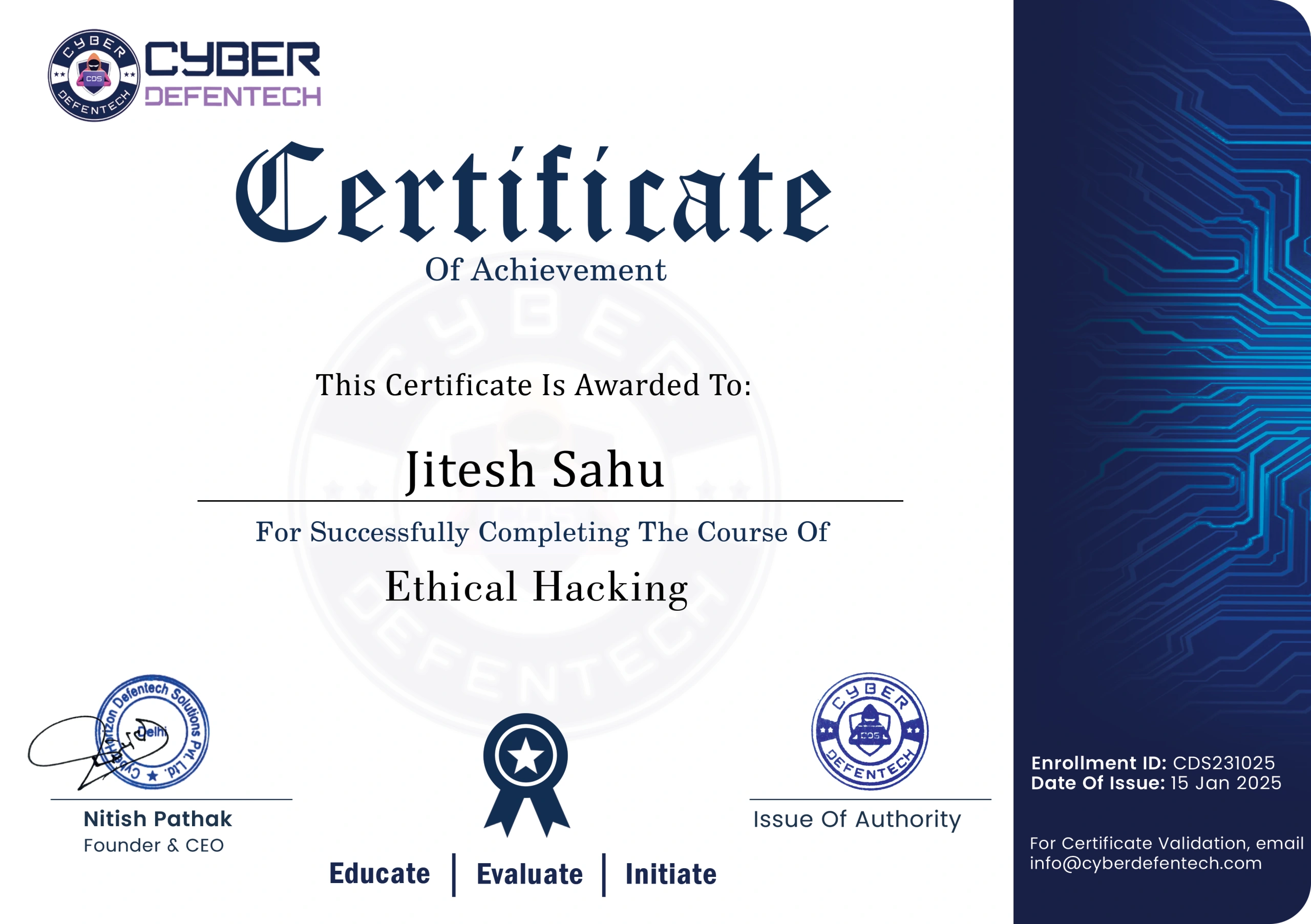
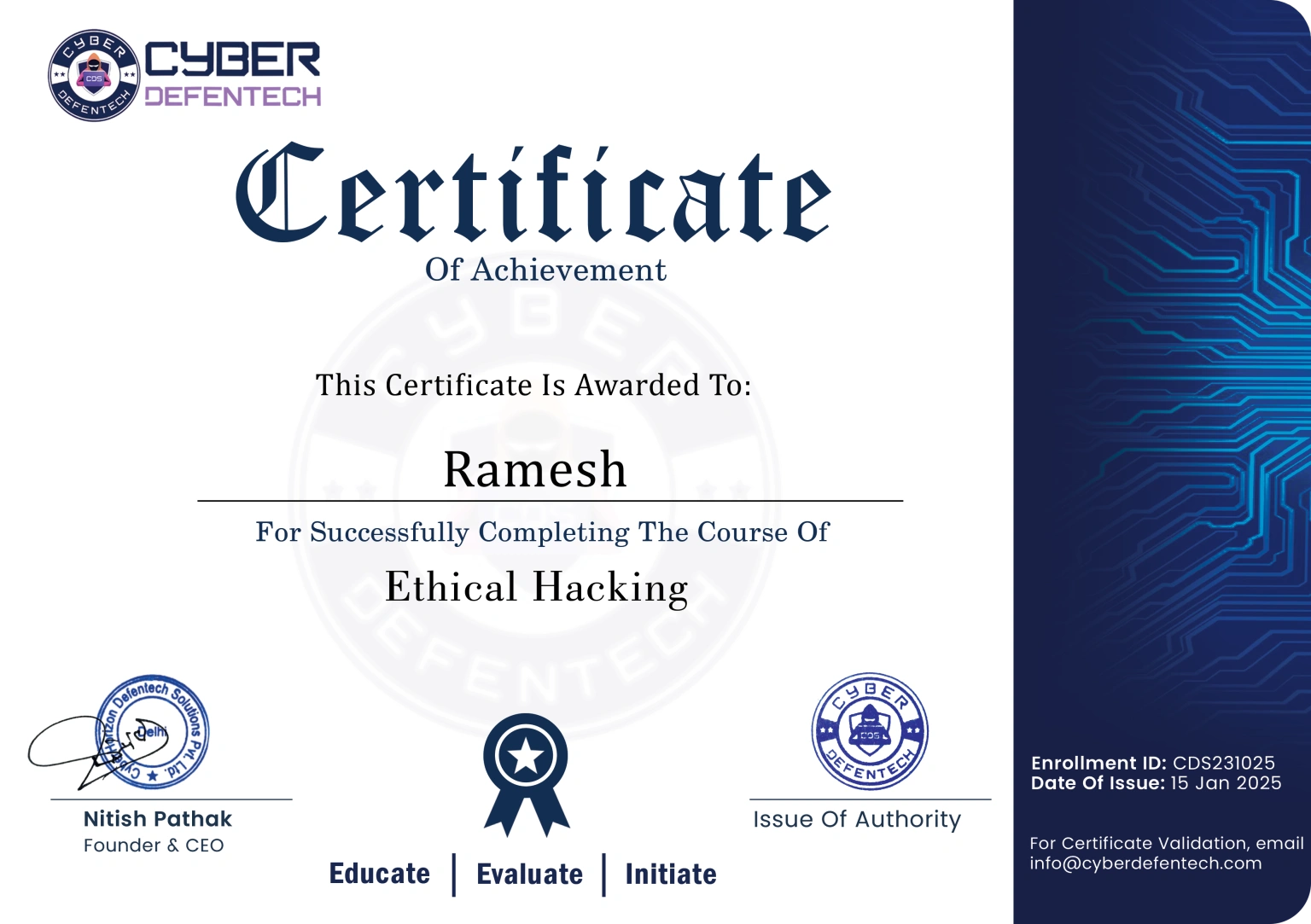

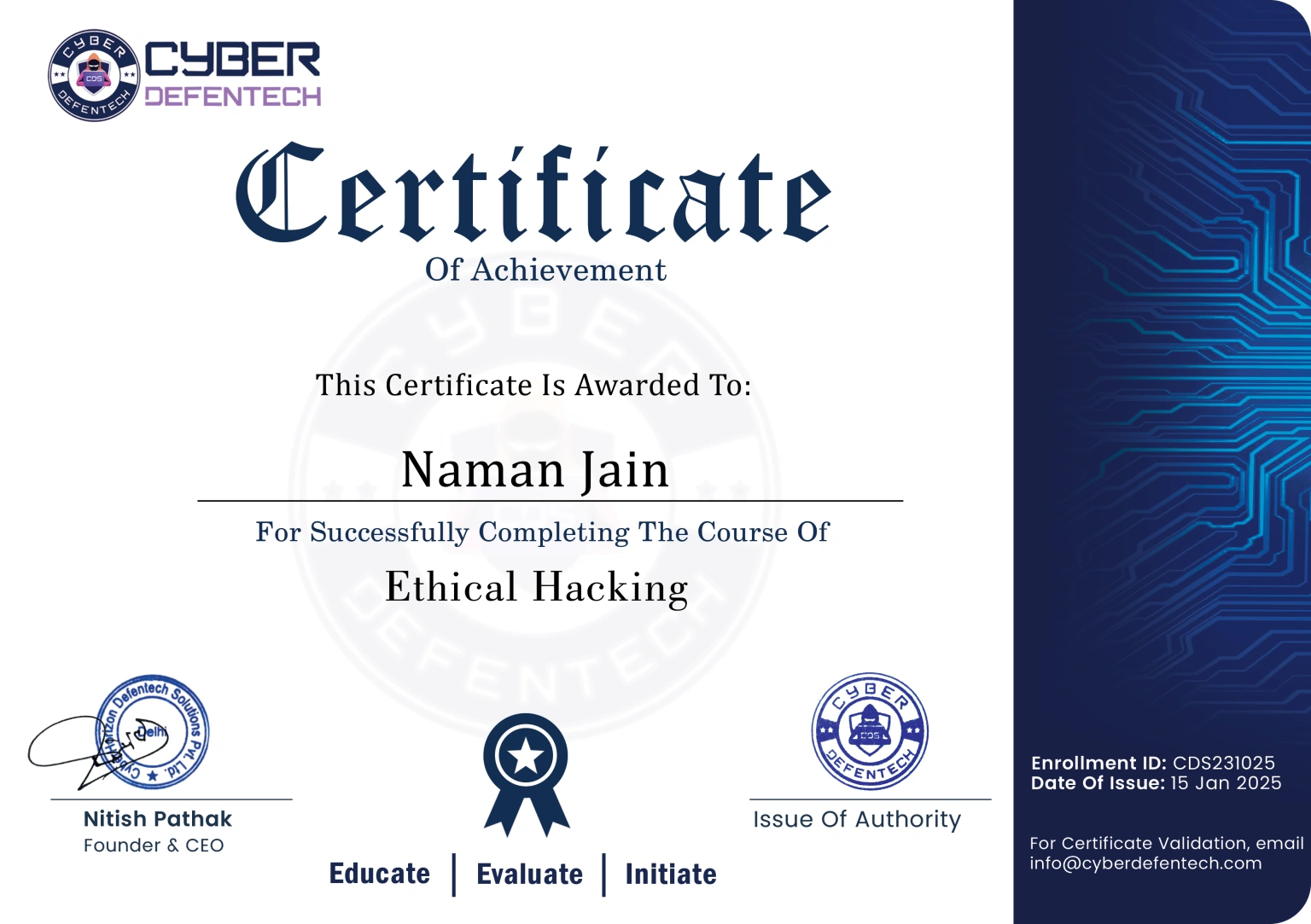




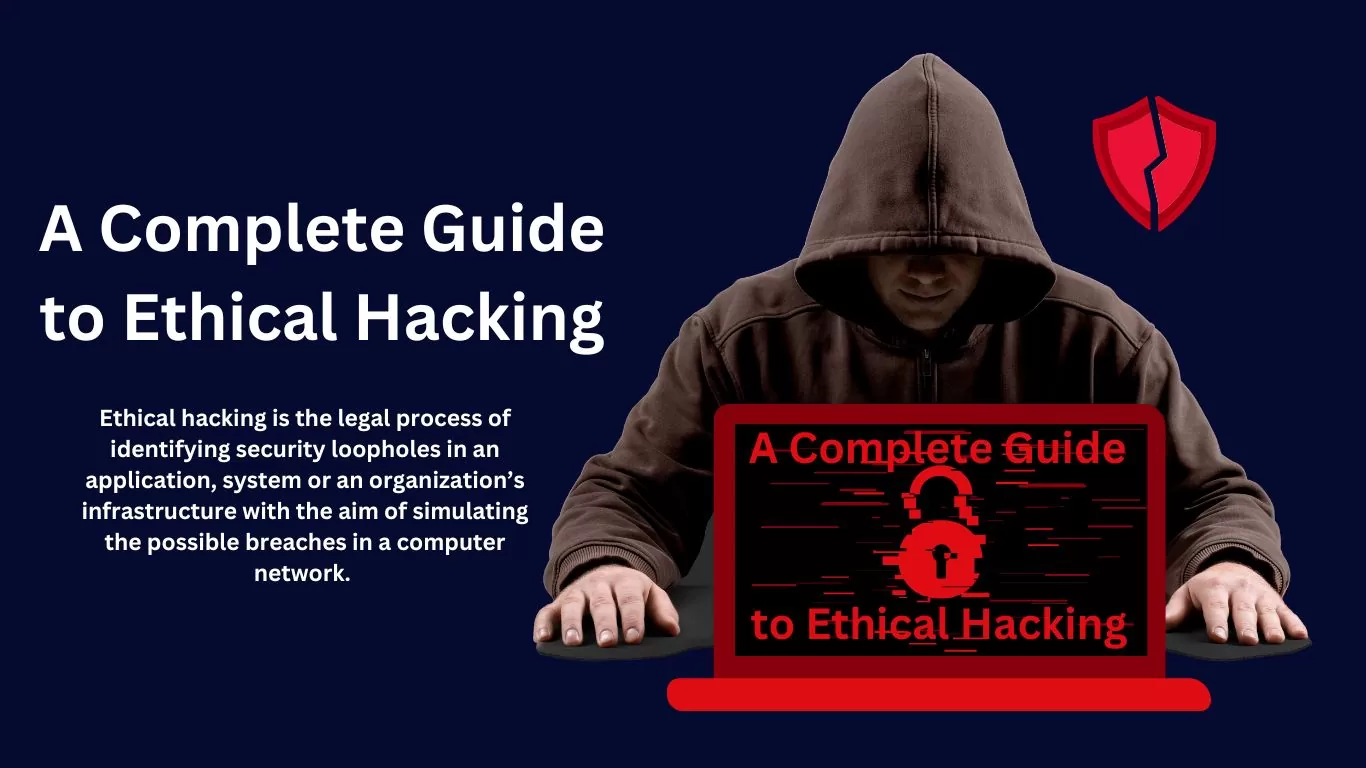
Ethical Hacking is the authorized practice of testing and evaluating computer systems, networks, or applications to identify security vulnerabilities before malicious hackers can exploit them. Ethical hackers (also called white-hat hackers) use the same techniques as cybercriminals but with permission and for defensive purposes. The goal is to strengthen an organization’s security by finding weaknesses and suggesting fixes.
Here are the prerequisites for learning Ethical Hacking after 12th: Basic Computer Knowledge – Understanding of operating systems (Windows, Linux) and how computers/networks work. Networking Fundamentals – Concepts like IP addresses, routers, firewalls, and protocols (TCP/IP, HTTP, etc.). Programming Basics – Knowledge of at least one language (Python, C, or JavaScript) helps in understanding exploits and automation. Cybersecurity Awareness – Familiarity with malware, phishing, viruses, and basic security practices. Problem-Solving & Curiosity – Interest in exploring how systems work and finding loopholes. 👉 No strict eligibility is required after 12th, but having a background in IT, Computer Science, or related diploma is helpful.
The objectives of an Ethical Hacking course are: Learn Cybersecurity Fundamentals – Build a strong foundation in networks, operating systems, and security concepts. Understand Hacking Techniques – Study how attackers exploit systems to identify weaknesses. Develop Defense Skills – Learn methods to secure applications, networks, and databases. Perform Penetration Testing – Practice simulating real-world attacks in a legal and controlled environment. Master Security Tools – Get hands-on experience with tools used for scanning, exploitation, and vulnerability assessment. Promote Ethical Practices – Understand legal and ethical responsibilities while performing security testing. Prepare for Certification & Careers – Gain skills needed for CEH, OSCP, and other cybersecurity certifications and roles.
An Ethical Hacking course generally covers these topics: Introduction to Ethical Hacking – Basics, roles, and legal aspects. Networking & Security Fundamentals – TCP/IP, firewalls, IDS/IPS. Footprinting & Reconnaissance – Gathering target information. Scanning Networks – Identifying live systems and open ports. Enumeration – Extracting system details and user data. System Hacking – Password cracking, privilege escalation. Malware Threats – Viruses, Trojans, and countermeasures. Sniffing & Spoofing – Packet analysis and identity spoofing. Social Engineering – Human-based attack techniques. Denial of Service (DoS/DDoS) Attacks – Detection and prevention. Web Application Hacking – SQL injection, XSS, CSRF. Wireless Network Hacking – Cracking Wi-Fi security. Cryptography – Encryption, hashing, and digital certificates. Cloud & IoT Security – Securing modern technologies. Penetration Testing & Reporting – Conducting ethical assessments.
Yes ✅, after completing an Ethical Hacking course, most institutes provide a certificate of completion. Additionally, you can pursue global certifications like: CEH (Certified Ethical Hacker – EC-Council) CompTIA Security+ / Pentest+ OSCP (Offensive Security Certified Professional) CHFI (Computer Hacking Forensic Investigator) These certifications validate your skills, enhance credibility, and improve job opportunities in the cybersecurity field.
The job market for Ethical Hackers is rapidly growing as cyber threats increase worldwide. Organizations in banking, IT, e-commerce, government, and defense are hiring ethical hackers to protect their systems. Ethical Hackers can work as: Penetration Testers Security Analysts Cybersecurity Consultants Vulnerability Assessors With certifications like CEH, OSCP, or CompTIA Pentest+, demand and salaries are even higher, making it a high-growth career option.


 (1) (1).webp)
.webp)
.webp)






 (2).webp)

.webp)
.webp)